
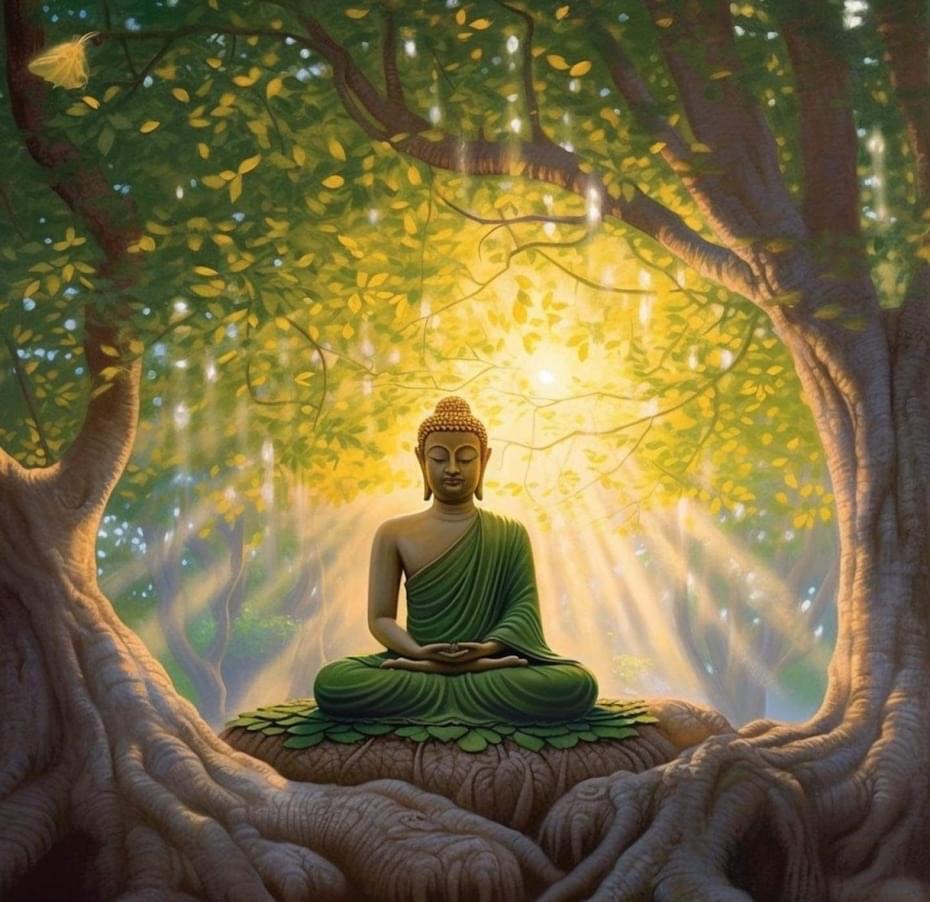
In today’s world, with an increasing number of people turning to Buddhism, it is crucial to understand what Buddhism truly is. This excerpt from a lecture by Dharma Master Chin Kung provides a profound insight into the essence of Buddhism, dispelling misconceptions and revealing its true nature as a path to enlightenment.
The Essence of Buddhism
Buddhism, at its core, is an education, the supreme education imparted by Buddha Shakyamuni to all beings across the nine realms of existence. This education is not merely intellectual but encompasses the cultivation of wisdom, morality, and compassion, leading to ultimate liberation from suffering.
The Teacher-Student Relationship
The unique aspect of Buddhism lies in its emphasis on the teacher-student relationship between the Buddha and his disciples. Unlike other religions that emphasize a divine-worshipper hierarchy, Buddhism recognizes the inherent potential for enlightenment within every being. The Buddha serves as a guide, illuminating the path to self-discovery and liberation.
The Buddha’s Wisdom
The term “Buddha-nature” (Buddhadhātu) refers to the boundless wisdom and potential inherent within all beings. It is not a separate entity but the true nature of our existence, obscured by ignorance and afflictions. The Buddha’s wisdom lies in his realization of this true nature, enabling him to guide others towards their own awakening.
Misconceptions about Buddhism
Unfortunately, Buddhism has often been misconstrued as a religion of blind faith and idol worship. This stems from a misunderstanding of the purpose of Buddhist statues and rituals. These serve as reminders of our own potential and expressions of gratitude towards the Buddha’s teachings, not as objects of worship or supplication.
The True Meaning of Buddhist Statues
The vast array of Buddhas and Bodhisattvas represented in Buddhist iconography reflects the multifaceted nature of enlightenment and the diverse paths leading to it. Each figure embodies a particular aspect of wisdom or virtue, serving as an inspiration for practitioners.
The significance of the Buddhas’ titles
The numerous titles of Buddhas and Bodhisattvas are not mere labels but profound expressions of their boundless qualities. They serve as reminders of the immense potential that lies dormant within each of us, waiting to be unearthed through spiritual cultivation.
The Purpose of Buddhism
Ultimately, Buddhism aims to empower individuals to realize their inherent Buddha-nature, leading to liberation from suffering and the attainment of true happiness and peace. It is a path of self-discovery and transformation, not one of blind faith or external dependence.
By understanding the true essence of Buddhism as an education for enlightenment, we can dispel misconceptions and embrace its profound teachings for our own personal transformation and the betterment of society as a whole.
